
Private Pilot Oral Exam Guide: Free Download & Preparation
Prepare effectively for your checkride! Access a comprehensive Private Pilot Stage Check Study Packet (PDF) from iflycoast.com, covering FAR/AIM, PHAK, and AC publications.
This valuable resource, published December 30, 2021, streamlines your oral exam preparation, ensuring you’re ready to demonstrate your aeronautical knowledge.
The Private Pilot Oral Exam is a crucial component of your flight training, evaluating your understanding of regulations, procedures, and aeronautical knowledge. It’s not a “test” to fail, but a conversation to assess your safety and decision-making abilities as a pilot.
Successful completion requires thorough preparation, utilizing resources like the Private Pilot Stage Check Study Packet available for free download from iflycoast.com. This PDF guide, published on December 30, 2021, focuses on key areas: FAR/AIM regulations, the Pilot’s Handbook of Aeronautical Knowledge (PHAK), and Advisory Circulars (AC) 00-45G and 00-6A.
The examiner will probe your knowledge of topics ranging from aircraft systems to weather interpretation, and importantly, your understanding of your privileges and limitations as a pilot. Remember, demonstrating a solid foundation in these areas is key to a positive outcome.
Importance of Thorough Preparation
Diligent preparation is paramount for success in the Private Pilot Oral Exam. It’s not enough to simply memorize facts; you must demonstrate a comprehensive understanding of aviation principles and regulations. A resource like the Private Pilot Stage Check Study Packet, freely downloadable from iflycoast;com, is an invaluable tool.
This PDF, updated December 30, 2021, consolidates essential information from the FAR/AIM, PHAK, AC 00-45G (Aviation Weather), and AC 00-6A (Pilot/Controller Glossary). Thoroughly reviewing these materials builds confidence and ensures you can articulate your knowledge clearly.
Preparation minimizes anxiety, allowing you to engage in a constructive dialogue with the examiner, showcasing your readiness to operate an aircraft safely and responsibly. Don’t underestimate the power of proactive study!
Required Documents for the Exam
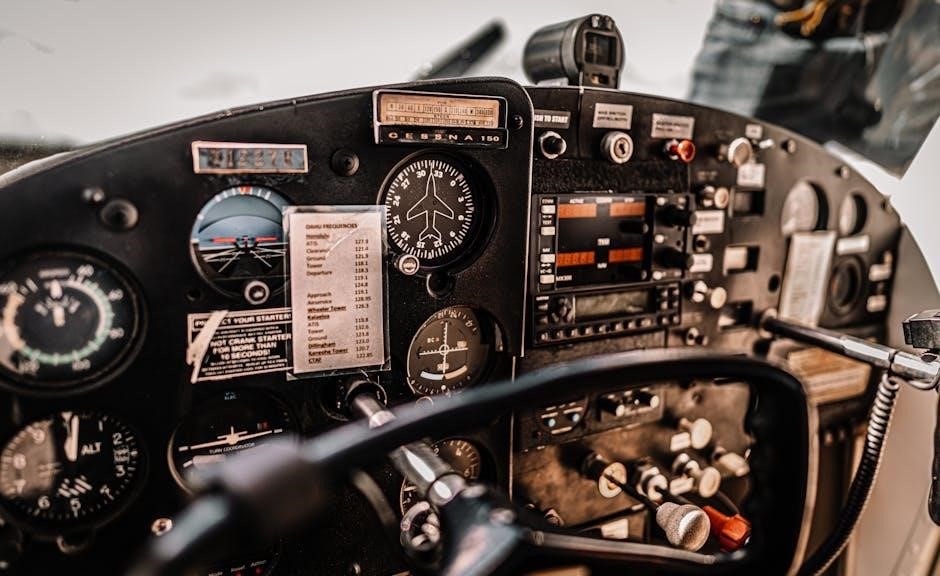
Bring essential items: pilot certificate, medical certificate, and government-issued photo ID; As a student pilot, endorsements in your logbook are also crucial.
Pilot Certificate & Medical Certificate
Present your valid pilot certificate, demonstrating completion of required training and knowledge. Understand its limitations and privileges as a Private Pilot. A current medical certificate is equally vital, confirming your physical and mental fitness to fly safely.
The examiner will verify the certificate’s validity and class. Student pilots require these documents when acting as Pilot in Command (PIC), specifically during solo flights. Remember, a lapsed medical certificate immediately grounds you.
Review the requirements for obtaining and maintaining both certificates. Knowing the expiration rules – 60 months under 40, 24 months over 40 for student certificates – is crucial. Ensure your documentation is readily accessible and in good order for a smooth exam process.
Government-Issued Photo Identification
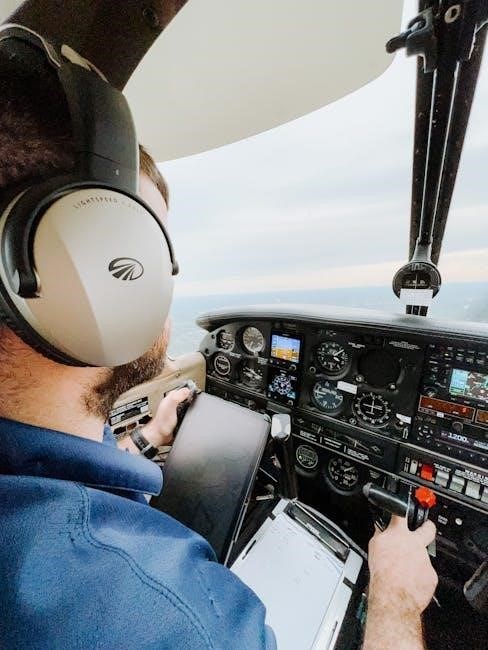
A valid, government-issued photo ID is a non-negotiable requirement for your Private Pilot oral exam. This serves as official verification of your identity, ensuring you are who you claim to be. Acceptable forms include a driver’s license, passport, or other state- or federally-issued identification card.
The examiner will meticulously compare the photo and information on your ID with your pilot certificate and medical certificate. Ensure your ID is current and hasn’t expired. Any discrepancies could cause delays or even invalidate the exam.
Keep this identification readily available throughout the entire examination process. It’s a fundamental aspect of maintaining security and accountability within the aviation system.
Logbook Requirements & Endorsements
Your logbook is crucial, documenting your flight experience and training. As a student pilot, it’s only required during the oral exam when acting as Pilot-in-Command (PIC), specifically for solo flights. However, bringing it is highly recommended to readily demonstrate endorsements.
The examiner will verify endorsements for solo flight, cross-country flight, and the practical exam itself. These endorsements confirm your instructor’s assessment of your readiness. Ensure all entries are complete, legible, and accurately reflect your flight time.
Digital logbooks are generally acceptable, but ensure they are easily accessible and printable if requested. A well-maintained logbook showcases your dedication and commitment to flight training.
Student Pilot Limitations
Student pilots face restrictions: no passengers, no carrying property for compensation, no business flights, and visibility/flight reference requirements apply during day and night operations.
Restrictions on Carrying Passengers
As a student pilot, a fundamental limitation concerns passenger carriage. You are strictly prohibited from carrying passengers in the aircraft during any flight operations. This restriction is outlined in FAR 61.89 and is a core element of student pilot privileges.
This rule exists to ensure focused training and development of piloting skills without the added responsibility of passenger safety. The emphasis remains on mastering aircraft control and decision-making in various scenarios.
The iflycoast.com study packet reinforces this point, highlighting it as a key aspect of student pilot limitations. Remember, this restriction lifts upon achieving a private pilot certificate, allowing you to legally carry passengers under specific conditions.
Prohibitions on Commercial Operations
Student pilots face a firm prohibition against engaging in any commercial operations. FAR 61.89 explicitly states you cannot carry property for compensation or hire. This means you cannot be paid, or receive any form of remuneration, for transporting people or goods.
Furthermore, flights conducted “in furtherance of a business” are also disallowed. This encompasses any flight directly related to a commercial venture or intended to generate profit. The iflycoast.com study guide clearly emphasizes this restriction.
The focus during student training is solely on skill acquisition and safe flight practices, not on commercial gain. Violating this prohibition can lead to legal repercussions and jeopardize your pilot certification.
Day/Night Visibility & Flight Reference Requirements

Student pilots are subject to strict visibility and flight reference requirements, as outlined in FAR 61.89. During daylight hours, flights must be conducted with at least 3 statute miles of visibility. At night, this requirement increases to a minimum of 5 statute miles.
Crucially, all flights – both day and night – must be performed with continuous visual reference to the surface. This means maintaining a clear and unobstructed view of the terrain below. The iflycoast.com study packet underscores the importance of these limitations.
These restrictions are in place to ensure student pilots operate within safe parameters and develop essential visual flight rules skills.
Private Pilot Privileges & Limitations
Private pilots can act as PIC, conduct search & rescue, and fly for charitable events, but cannot fly for hire or compensation.
Permitted Operations (PIC, Search & Rescue, etc.)
As a certificated private pilot, you possess a range of authorized operational privileges. You are permitted to act as Pilot-in-Command (PIC) of an aircraft, carrying passengers under specific currency requirements. Furthermore, you can engage in vital search and rescue operations, contributing to the safety of others.
Privileges extend to flying for charitable, non-profit, or community events, offering valuable services without commercial gain. Notably, a private pilot holding at least 200 hours of flight time can also act as an aircraft salesman, demonstrating expertise and assisting in aircraft transactions.
These permitted operations showcase the versatility and responsibility inherent in the private pilot certificate, allowing for a broad spectrum of aviation activities beyond personal transportation. Remember to consult the Private Pilot Stage Check Study Packet for detailed regulations;
Restrictions on Flying for Hire
A core limitation of the private pilot certificate centers around operating an aircraft for compensation or hire. Directly flying passengers or cargo for a fee is strictly prohibited. This means you cannot be paid to transport individuals or goods, even if it seems like a simple favor.
However, a crucial exception exists regarding the “pro rata share” of operating expenses. You can share the costs of a flight with passengers, but only to the extent of your proportionate share. This ensures you aren’t effectively charging for the flight itself.
Understanding these restrictions is vital for legal and ethical flight operations. Refer to the Private Pilot Stage Check Study Packet for a comprehensive overview of permissible and prohibited activities related to commercial operations.
Pro Rata Share of Operating Expenses
As a private pilot, you’re permitted to share the operating expenses of a flight with your passengers, but only on a “pro rata” basis. This means each person onboard contributes to the costs – fuel, oil, airport fees, and rental fees – in proportion to their weight or distance flown.

Crucially, you cannot profit from the flight. The shared expenses must accurately reflect the actual costs incurred, and you cannot charge a premium for your piloting services. This distinction is vital to avoid violating regulations prohibiting flying for hire.
The Private Pilot Stage Check Study Packet, available for download, provides detailed guidance on calculating and applying the pro rata share principle, ensuring compliance with FAR regulations.
Pilot Certificate Currency Requirements
Maintain currency with a flight review every 24 months for PPL holders! Student pilots have different validity periods based on age, as detailed in the guide.
Student Pilot Certificate Validity (Under 40)
For student pilots under the age of 40, the issued student pilot certificate maintains its validity for a period of 60 calendar months. This timeframe allows ample opportunity to accumulate flight hours and progress through the training syllabus. However, it’s crucial to remember that maintaining a valid medical certificate is also a prerequisite for continued exercise of student pilot privileges.
The Private Pilot Stage Check Study Packet (PDF), available at iflycoast.com, emphasizes the importance of understanding these time limitations. Regularly reviewing the document ensures awareness of certificate expiration dates, preventing any disruptions to flight training. This guide, published on December 30, 2021, provides a concise overview of all relevant regulations, including those pertaining to student pilot certificate validity.
Remember, proactive management of your certificate’s expiration date is essential for uninterrupted progress towards your private pilot license.
Student Pilot Certificate Validity (Over 40)
Student pilots who are 40 years of age or older have a different validity period for their student pilot certificate compared to their younger counterparts. Their certificate is valid for 24 calendar months from the date of issuance. This shorter timeframe necessitates diligent tracking of the expiration date to avoid any lapse in training authorization.
The Private Pilot Stage Check Study Packet (PDF), sourced from iflycoast.com, clearly outlines this distinction and stresses the importance of timely renewal. Published December 30, 2021, this resource serves as a valuable tool for understanding all aspects of student pilot requirements.
Maintaining a current medical certificate remains a fundamental requirement alongside certificate validity. Proactive planning and awareness of the 24-month limit are key to a smooth and continuous flight training experience.
Maintaining Currency: Flight Reviews (PPL)
Private Pilot License (PPL) holders must complete a flight review every 24 calendar months to remain current and legally able to exercise the privileges of their certificate. This review, conducted with a certified flight instructor (CFI), ensures continued proficiency in safe flight operations and regulatory compliance.
The Private Pilot Stage Check Study Packet (PDF), available from iflycoast.com (published December 30, 2021), emphasizes the necessity of these periodic reviews. It’s a critical component of ongoing pilot competency.
The flight review encompasses both an oral examination and a flight portion, covering areas like regulations, maneuvers, and emergency procedures. Proactive scheduling of this review is vital to avoid any interruption in flying privileges and maintain a safe piloting skillset.

Currency for Carrying Passengers
To legally carry passengers, pilots need 3 takeoffs and landings within the preceding 90 days in a comparable aircraft, as detailed in study guides.
Recent Flight Experience (Takeoffs & Landings)
Maintaining passenger-carrying privileges demands recent flight experience, specifically three takeoffs and landings performed within the 90-day period immediately preceding the flight. These maneuvers must be executed in an aircraft of the same category, class, and type, if type ratings are applicable, to ensure proficiency.
This requirement, thoroughly outlined in resources like the Private Pilot Stage Check Study Packet available for download, emphasizes the importance of staying current with flight skills. Night currency necessitates that all three landings are completed during nighttime conditions.
Failing to meet these requirements renders a pilot ineligible to carry passengers, highlighting the critical nature of adhering to FAR 61.57 regulations for safe and legal flight operations.
Night Currency Requirements
Maintaining night flight privileges requires specific recent experience. Pilots must complete three takeoffs and landings within the preceding 90 days to legally operate an aircraft at night. Crucially, all three landings must be performed during the period between sunset and sunrise.
This requirement, detailed in resources like the downloadable Private Pilot Stage Check Study Packet, ensures pilots retain proficiency in low-visibility conditions. Proper planning and adherence to FAR 61.57 are essential for safe night flying.
Without this recent night experience, a pilot is prohibited from carrying passengers during nighttime operations, emphasizing the importance of currency for both safety and regulatory compliance.
FAR/AIM & AC Resources
Master essential regulations! The Private Pilot Stage Check Study Packet (PDF) emphasizes FAR/AIM, PHAK, AC 00-45G, and AC 00-6A for exam success.
Understanding FAR/AIM Regulations
Federal Aviation Regulations (FARs) and the Aeronautical Information Manual (AIM) are foundational to safe and legal flight operations, and a core component of your private pilot oral exam. The Private Pilot Stage Check Study Packet (PDF), available from iflycoast.com, specifically highlights the importance of these resources.
Expect questions regarding airspace classifications, operating requirements, and pilot responsibilities as outlined within the FAR/AIM. Thoroughly review Part 61 concerning pilot certification and Part 91 governing general operating and flight rules. The AIM supplements the FARs, providing detailed explanations and guidance for pilots.
Understanding these regulations isn’t simply memorization; it’s about applying them to real-world scenarios. Be prepared to discuss how you would comply with specific regulations in various flight situations. This study packet will help you navigate these complex, yet crucial, aspects of aviation.
Utilizing AC 00-45G (Aviation Weather)
Advisory Circular (AC) 00-45G, Aviation Weather, is critical for safe flight planning and execution, and a key focus during your private pilot oral exam. The Private Pilot Stage Check Study Packet (PDF), sourced from iflycoast.com, emphasizes its importance.
Be prepared to discuss weather reports (METARs, TAFs), forecasts, and graphical weather briefings. Understand how to interpret weather charts, including surface analysis, winds aloft, and significant weather charts. Expect questions on recognizing and avoiding hazardous weather conditions like thunderstorms, icing, and turbulence.
Demonstrate your ability to obtain and analyze current weather information, and make informed “go/no-go” decisions. Knowing how weather impacts aircraft performance and flight planning is essential. AC 00-45G provides the detailed knowledge needed to confidently address weather-related inquiries.
Referencing AC 00-6A (Pilot/Controller Glossary)
AC 00-6A, the Pilot/Controller Glossary, establishes standardized phraseology for clear communication between pilots and air traffic control (ATC). The Private Pilot Stage Check Study Packet (PDF), available at iflycoast.com, highlights its necessity for a successful oral exam.
Expect questions regarding common ATC clearances, instructions, and pilot readbacks. Understand the meaning of frequently used terms like “hold short,” “expedite climb,” and “squawk.” Be prepared to define radio communication procedures and emergency phrases.
Demonstrate your knowledge of proper radio technique and the importance of concise, unambiguous communication. Familiarity with AC 00-6A ensures you understand ATC expectations and can respond appropriately, promoting safety and efficiency in the National Airspace System.